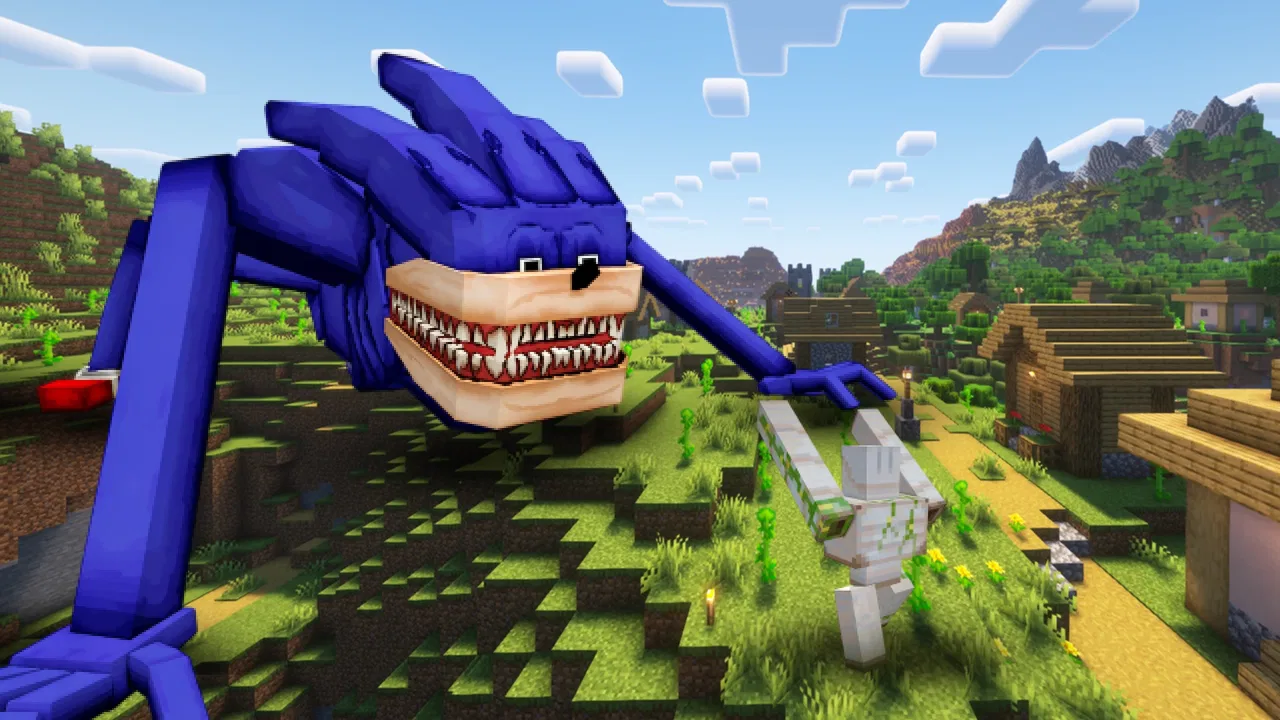
Craft Block 3D: Battle World
- 3.8
- Rating
- 1.00M
- Installs
- Free
- Price

 Analysis by App-foxy
I approached Craft Block 3D: Battle World as a free mobile simulation game with two very different promises in the same package: building a personal block-based environment and stepping into fights against mobs. That combination gives it a more active feel than a quiet construction sandbox, but it also means the game has to balance creativity, exploration, and combat without making any one part feel like an afterthought.
My first impression is that this is best understood as a casual 3D crafting world rather than a deep survival simulation. The appeal is immediate: shape a world, look around a block-built city, and prepare for battles when you want something more energetic. I can see why it has attracted over a million installs, although its average rating of 3.8 from around 700 ratings suggests that the experience will not suit everyone equally.
The game is free and carries an Everyone age rating, which makes it easy to consider for younger players, families, or anyone who wants a low-commitment building game. Still, an age label does not automatically tell me whether the pacing, controls, or combat rhythm will feel comfortable for every player. In practice, the main question is whether you want a simple block world with action attached, or a more polished alternative focused entirely on construction or survival.
You May Also Like

 Blood Strike: 2.5 Anniversary
Blood Strike’s Loadouts Turn Every Drop Into a Tactical Gamble
A close look at Blood Strike’s custom loadouts: how fast access to signature weapons reshapes its battle royale rhythm, rewards preparation, and narrows the gap between fights.

 Pandora - Music & Podcasts
Pandora’s Music Is Easy to Start, but Harder to Recover
Pandora’s strength is its low-effort path from a seed to a station. Its weak spot is how much confidence it asks you to place in connection, setup, and quiet recovery.

 8 Ball Pool
 Is Built on Rivalries, Rematches, and Routine
A close look at the rivalries, rematches, shared routines, and unanswered safety questions that turn a quick pool match into a persistent mobile community.

 Samsung Music
’s Quiet Strength Is Playing What You Already Own
Its reach comes less from spectacle than from dependable access to a personal library. That simplicity is both the app’s strongest retention engine and its ceiling.

 AccuWeather: Weather Radar
AccuWeather Review: A Quick, Clear Forecast for Everyday Decisions
For everyday plans, the best forecast is the one you can understand quickly. AccuWeather makes rain timing, radar, and local conditions easy to act on, with a few trade-offs.

 Hill Climb Racing
Why Hill Climb Racing Still Turns Crashes Into One More Run
A tiny car, a bumpy hill and one more upgrade: Hill Climb Racing keeps resurfacing because its simple chaos makes every near-miss feel personal.
More From Our News Desk
View All News


Building a world before the battles begin
The strongest reason to try this game is the basic creative loop. I enjoy games that let me make a place feel like my own, and a block-based environment naturally encourages small projects: a home, a meeting area, a defensive corner, or a city district that gradually becomes more recognizable. The important thing is not only the finished result. It is the feeling of deciding what belongs where and then seeing the environment change because of those decisions.
The city setting gives the building side a useful direction. Instead of treating every block as an isolated object, I can think in terms of streets, open spaces, buildings, and routes between important areas. That makes a short play session more purposeful. If I only have a few minutes, I might improve one structure or create a safer route. With more time, I can work on a larger section and then explore it from another angle.
That approach is more satisfying than placing blocks randomly, especially when combat is part of the same world. A building can be decorative, but it can also become a landmark or a place I use to orient myself. A wide open area may look attractive, yet a tighter layout can make movement and preparation easier. The most useful building habit is to create with future movement in mind, not just appearance.
I would not expect the same depth as a dedicated construction game. A focused sandbox usually gives more room for elaborate design, long-term projects, and detailed experimentation. Here, the presence of mob battles changes the priority. The world is not only a canvas; it is also the stage for action. Players who want a pure creative tool may find the combat emphasis distracting, while players who like building with a reason behind it may appreciate the extra purpose.
How the city setting changes the experience
A city-themed world works well for players who need ideas. A blank landscape can be intimidating, but streets and buildings suggest natural starting points. I can begin with one central structure, add nearby paths, and then expand outward. This creates a simple project plan without requiring a complicated building guide.
For a realistic everyday session, imagine playing after school or during a short break. I would first walk through the current area rather than immediately placing blocks. That quick tour helps me notice which parts feel empty, confusing, or difficult to cross. I would then choose one small objective, such as improving a building entrance or making a clearer route through the city. After that, I could test the area during a battle and see whether the changes help.
This is a better workflow than trying to redesign everything at once. It keeps the game manageable and gives each session a clear result. It also exposes a trade-off: a visually impressive layout may not be the most practical one when enemies are involved. If I build only for screenshots or decoration, I may later discover that movement feels awkward. If I build only for efficiency, the city may lose personality.
Exploration is similarly more enjoyable when I give myself a purpose. I might look for a useful location, inspect how different areas connect, or choose a place for the next project. Wandering without an objective can still be relaxing, but it may feel thin if I am expecting a large adventure with a detailed narrative. This game seems better suited to self-directed play than to story-driven progression.
Making combat part of the building plan
The promise of battles against more than 99 kinds of mobs gives the game a clear action hook. I would approach the combat as an interruption to the creative loop rather than as a separate arena game. Build something, explore it, face enemies, then reconsider the layout. That rhythm can keep construction from becoming passive.
The practical lesson is to avoid treating every battle as a test of reflexes alone. The environment should matter. Before entering a difficult encounter, I would make sure I understand the nearby space, identify where I can move safely, and avoid filling every area with decorative clutter. Even without assuming advanced mechanics, good spatial awareness is a sensible advantage in a block-based world.
Another useful habit is to separate experimentation from serious progress. When I am testing a new structure, I would avoid placing it in the most important route until I know how it affects movement. A small side area is a safer place to try unusual designs. This reduces the frustration of discovering that a creative idea has made the city harder to navigate.
The combat side may also help younger or less experienced players stay interested in building. A construction project can feel slow if there is no short-term activity around it. Battles provide a reason to return to the world and a change of pace when placing blocks starts to feel repetitive. On the other hand, players who dislike enemy encounters may find that the action interrupts the calm atmosphere they wanted from a crafting game.
Progress, pressure, and the question of spending
Craft Block 3D: Battle World is listed as free, so the initial barrier is low. I can try the building and battle loop without deciding to buy the game first. That is valuable for a mobile title because the central question is often whether the controls and pace feel good within the first session.
When I think about spending, I separate what is confirmed from what is merely possible in many mobile games. The listed price is free, but that alone does not explain whether optional purchases exist, whether progress can be accelerated, or whether any items affect combat. I would not assume a fair or unfair purchase model without seeing the actual in-game prompts. For a cautious player, the sensible approach is to treat the free download as a trial and review any purchase screen carefully before confirming anything.
That uncertainty matters most when progress begins to feel pressured. A good free game should let me understand why I am stuck. If a battle is difficult, I want to know whether I need better preparation, a different route, more practice, or simply a stronger character or item. If the reason is unclear, the experience can start to feel like it is pushing me toward spending even when no purchase is required.
I would therefore judge the game session by how much control it gives me over my next step. Can I return to building when I need a break? Can I explore instead of repeating the same fight? Can I improve my surroundings in a way that feels meaningful? These questions are more useful than focusing only on how quickly I advance.
For parents, the free label should not be treated as a complete spending guarantee. I would still use the device’s purchase protections and discuss expectations with younger players. The Everyone rating makes the game broadly accessible, but spending decisions are a separate matter from content suitability. That distinction is easy to miss when a game looks simple and family-friendly.
Where progress can feel satisfying
The most satisfying progress here is likely to be visible progress. A city that develops from a rough starting area into a more organized place gives me something concrete to look back on. I can remember why I built a certain structure and notice how my priorities changed after encountering enemies.
This kind of progress is different from unlocking a long chain of story rewards. It depends more on personal goals, which can be liberating but also demanding. The game may not always tell me what to do next in a way that feels motivating. I need to create my own projects, and that works best for players who enjoy setting small targets.
I recommend using a simple three-part routine: explore one area, improve one practical feature, and then test the result in action. This keeps the game from becoming an unfocused cycle of wandering and random placement. It also creates a natural way to measure whether a building decision helped rather than merely looking attractive.
Another trade-off is the difference between speed and care. Rushing through construction may get me into combat sooner, but it can leave the city feeling unfinished. Spending too long perfecting one building may reduce the variety of the session. I prefer alternating between quick functional work and occasional decorative projects so the world grows without turning into a chore.
Fairness in battles and choosing the right alternative
From a fairness perspective, I would look for a clear relationship between preparation and success. If careful movement, sensible construction, and practice improve my results, the battle system feels earned. If success depends mainly on hidden advantages or unclear upgrades, the experience becomes harder to trust.
The game’s large mob roster sounds designed to provide variety, but the number alone does not guarantee that encounters feel meaningfully different. What matters to me is whether I need to adjust my approach from one enemy type to another. Even modest differences in movement, timing, or positioning can make a battle more interesting. If every opponent is handled in nearly the same way, the headline promise has less practical value.
I would also pay attention to whether the city remains useful during fights. A fair environment should reward awareness without making the layout feel like a puzzle I could never have anticipated. That is why I would test new areas gradually instead of committing all my building work to one grand design. Small experiments make it easier to tell whether difficulty comes from my choices or from the encounter itself.
Compared with a pure block-building sandbox, this game offers more immediate tension and a reason to revisit familiar spaces. Compared with a dedicated action game, it is likely to appeal more to players who want combat in shorter bursts rather than constant fighting. A traditional survival game may be a better choice for someone seeking resource management, long-term danger, and a more demanding sense of vulnerability. A peaceful creative alternative may be better for children or adults who want to build without enemies interrupting the process.
The right choice depends on what I want from the session. If I want to make a city and occasionally defend it, this combination is attractive. If I want advanced architecture, deep survival systems, or highly competitive combat, I would look elsewhere. The game’s identity is strongest in the middle ground between those extremes.
Who should try it, and who should skip it
I would recommend it to casual players who enjoy block-based building but need more activity than a quiet sandbox provides. It also makes sense for someone who likes creating a setting and then testing that setting through battles. Younger players may enjoy the accessible premise, while experienced players can use the city as a personal design challenge.
I would be more cautious about recommending it to players who need precise progression, a strong narrative, or a clearly explained competitive system. Those players may become frustrated if self-directed building is not enough to keep them engaged. I would also skip it if my main goal were a completely peaceful construction experience, because the combat element is central to the game’s identity.
For a family sharing a device, I would suggest agreeing on a small building goal before playing. One person could design the exterior of a structure while another tests how easy it is to move around it. That turns the game into a cooperative planning exercise, even if the game itself does not provide a formal team feature. The important point is to avoid assuming that everyone wants the same balance between decoration and fighting.
For solo players, the best use case is a series of short, personal projects. Instead of expecting the game to supply endless direction, I would decide what the city needs next: a landmark, a clearer route, a defensive arrangement, or a new area to explore. That mindset makes the experience feel more intentional and reduces the risk of losing interest after the first novelty fades.
What I would check before committing long term
The current version is 1.0.02 and requires Android 9 or later, so compatibility is an important first check for anyone using an older phone or tablet. A game can be appealing in theory and still be a poor fit if the device cannot run it comfortably. I would also give the controls a proper trial rather than judging the game from its description, because building and combat both depend heavily on how natural movement and placement feel.
The developer is Fanush, and the game was released on April 8, 2026. Those details place the title in a relatively early stage of its public life, so I would approach it as a game that may still be establishing its identity. I would not treat the current version as a promise of a particular future roadmap. Instead, I would judge what is playable now and keep expectations realistic about how much depth the present package offers.
The review count is small, with only a handful of written reviews compared with the much larger install figure. That makes the average rating useful as a general signal, but not a complete picture of every device, play style, or expectation. I would pay attention to my own first session, especially the clarity of the controls, the rhythm of battles, and whether building feels rewarding after the initial exploration.
There are also practical unknowns I would resolve through direct use: how quickly the game introduces combat, how much freedom the building tools provide, and whether the city remains interesting after the first project. These are not minor details. They determine whether the game works as a lasting hobby or only as a brief experiment.
My advice is to start conservatively. Build a small area, test it, and avoid investing hours in a complicated city plan before understanding how battles interact with the environment. This is a useful safeguard for both time and enjoyment. If the core loop feels good at that scale, expanding becomes exciting. If it does not, I have learned that early without feeling trapped by a large unfinished project.
My trust verdict after weighing the whole package
Craft Block 3D: Battle World has a clear, approachable idea: let me create a block-built city and give me reasons to explore and defend it. I like that the game can turn construction into something active rather than purely decorative. The free entry point and Everyone rating also make it easy to test, provided players and parents handle spending decisions thoughtfully instead of assuming that free means every future option is cost-free.
Its limitations are just as important. The game may not satisfy players looking for a deep survival simulation, a polished competitive battler, or a fully guided adventure. The early version number and modest written-review sample also encourage a measured approach. I would not buy into promises beyond what the current experience actually delivers.
My honest recommendation is to try it if you enjoy making small worlds and do not mind those worlds becoming arenas for mob encounters. Begin with practical construction, use short objectives, and treat each battle as feedback about your layout. That approach brings out the game’s most interesting trade-off: the best city is not necessarily the prettiest one, but the one that remains enjoyable to explore when the action starts.
For me, the title works best as a casual creative-action game rather than a replacement for every other block-building experience. If you want a free starting point for building, exploring, and testing your own city ideas, it is worth a careful try; if you need guaranteed depth or transparent long-term progression, keep your expectations modest. The most trustworthy way to decide is to play a small, focused session and see whether the combination of construction and combat genuinely gives you more to do, rather than simply adding more activity.
FAQs for Craft Block 3D: Battle World
01What is Craft Block 3D: Battle World?
Craft Block 3D: Battle World is an immersive sandbox adventure game available on Android and iOS. Players can build, explore, and battle within a block-based universe. With a variety of modes and challenges, it offers both single-player and multiplayer options to suit different play styles.
02Is Craft Block 3D: Battle World free to play?
Yes, Craft Block 3D: Battle World is free to download and play. However, it includes in-app purchases for additional content, skins, and power-ups. These purchases can enhance your gaming experience, but they are not necessary to enjoy the core features of the game.
03What are the system requirements for Craft Block 3D: Battle World?
To run Craft Block 3D: Battle World smoothly, ensure your device meets the minimum requirements. For Android, it requires version 5.0 or above, and for iOS, version 10.0 or later. Adequate storage space and a stable internet connection are recommended for optimal performance.
04Can I play Craft Block 3D: Battle World offline?
Craft Block 3D: Battle World offers both online and offline modes. While you can enjoy building and exploring in offline mode, certain features like multiplayer battles and leaderboards require an internet connection to access and enjoy fully.
05How does multiplayer mode work in Craft Block 3D: Battle World?
In multiplayer mode, you can team up with friends or compete against other players worldwide. The game features various battle arenas and cooperative build challenges. Communication is key, and you can use in-game chat to strategize and collaborate with your teammates.
Pros
- Engaging sandbox environment for creativity.
- Stunning graphics enhance gameplay experience.
- Intuitive controls for easy navigation.
- Multiplayer mode for competitive fun.
- Regular updates with new content.
Cons
- Occasional in-app purchase prompts.
- Can be resource-heavy on older devices.
- Learning curve for new players.
- Limited offline capabilities.
- Some ads can be intrusive.

Craft Block 3D: Battle World
Gallery